
Sandwich Packaging That Protects Freshness and Builds Your Brand
Great sandwiches deserve packaging that keeps them fresh, safe, and looking their best. Whether you run a busy deli, a growing café chain, or a food truck with lines out the door, the right sandwich packaging protects your product from prep to plate. It locks in flavor, prevents crushing during transport, and gives customers a clean, professional experience every single time.
This page walks you through everything you need to know, from material choices to bulk buying options. You’ll find real comparisons, practical use cases, and expert guidance to help you pick packaging that works for your business.
Why Sandwich Packaging Matters More Than You Think
Packaging does far more than hold food. It’s the first thing a customer touches and often the last impression they take home. Poor food packaging leads to soggy bread, leaking fillings, and frustrated buyers. Smart packaging keeps everything intact and turns a simple lunch into a memorable experience.
Food safety is another huge factor. Proper sandwich packaging creates a barrier against contamination, keeps ingredients at the right temperature, and meets health regulations across the United States. For any food business, that protection isn’t optional. It’s essential.
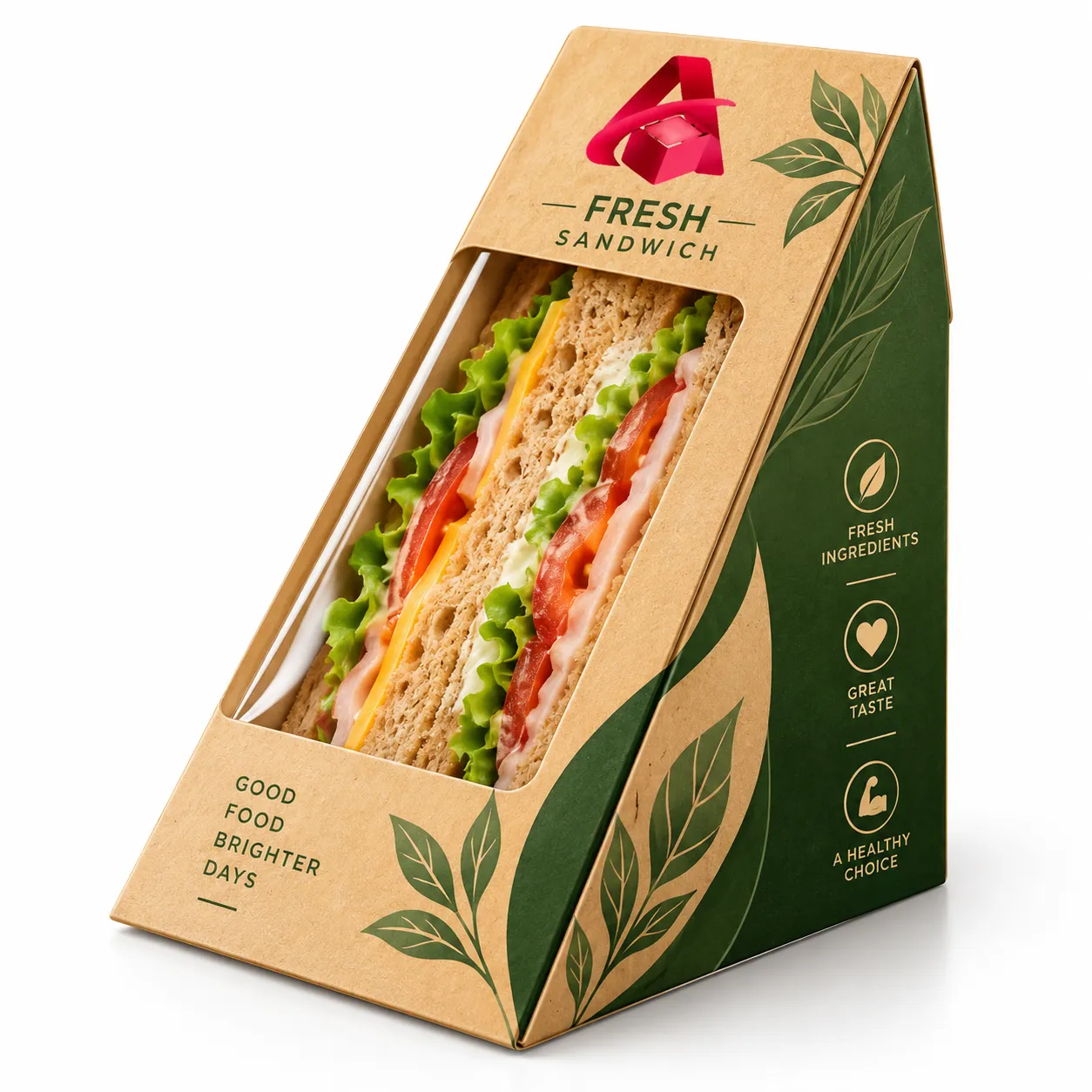
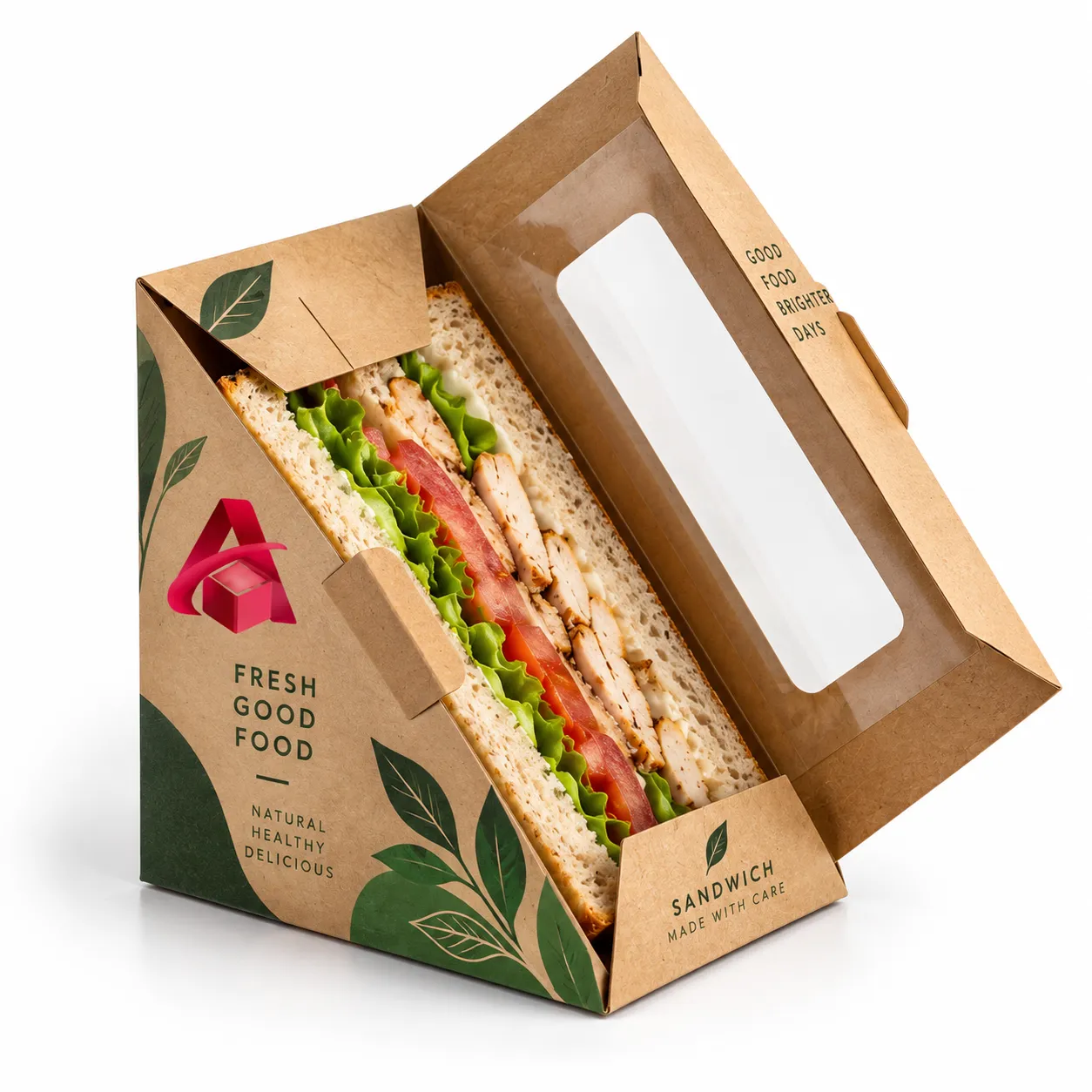
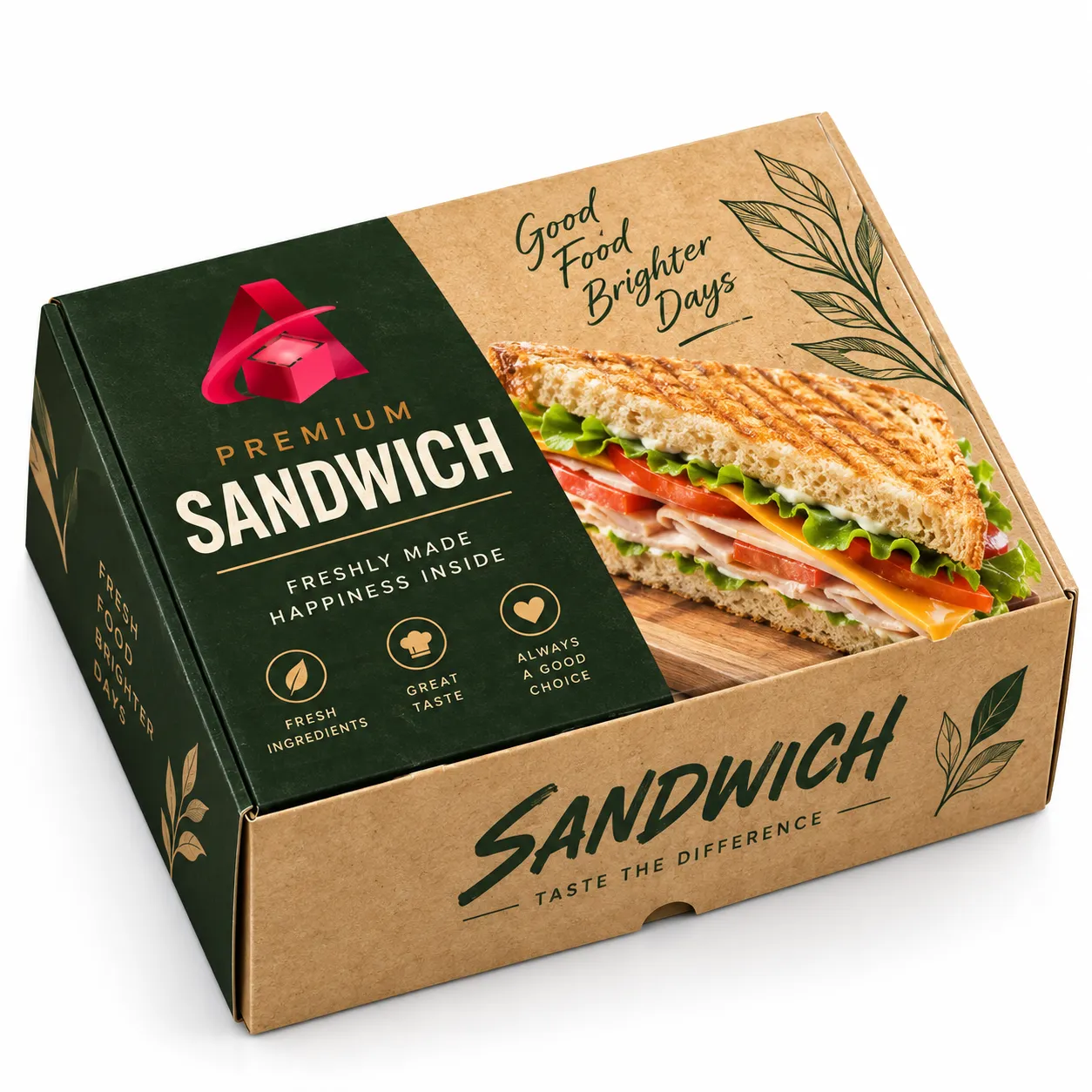
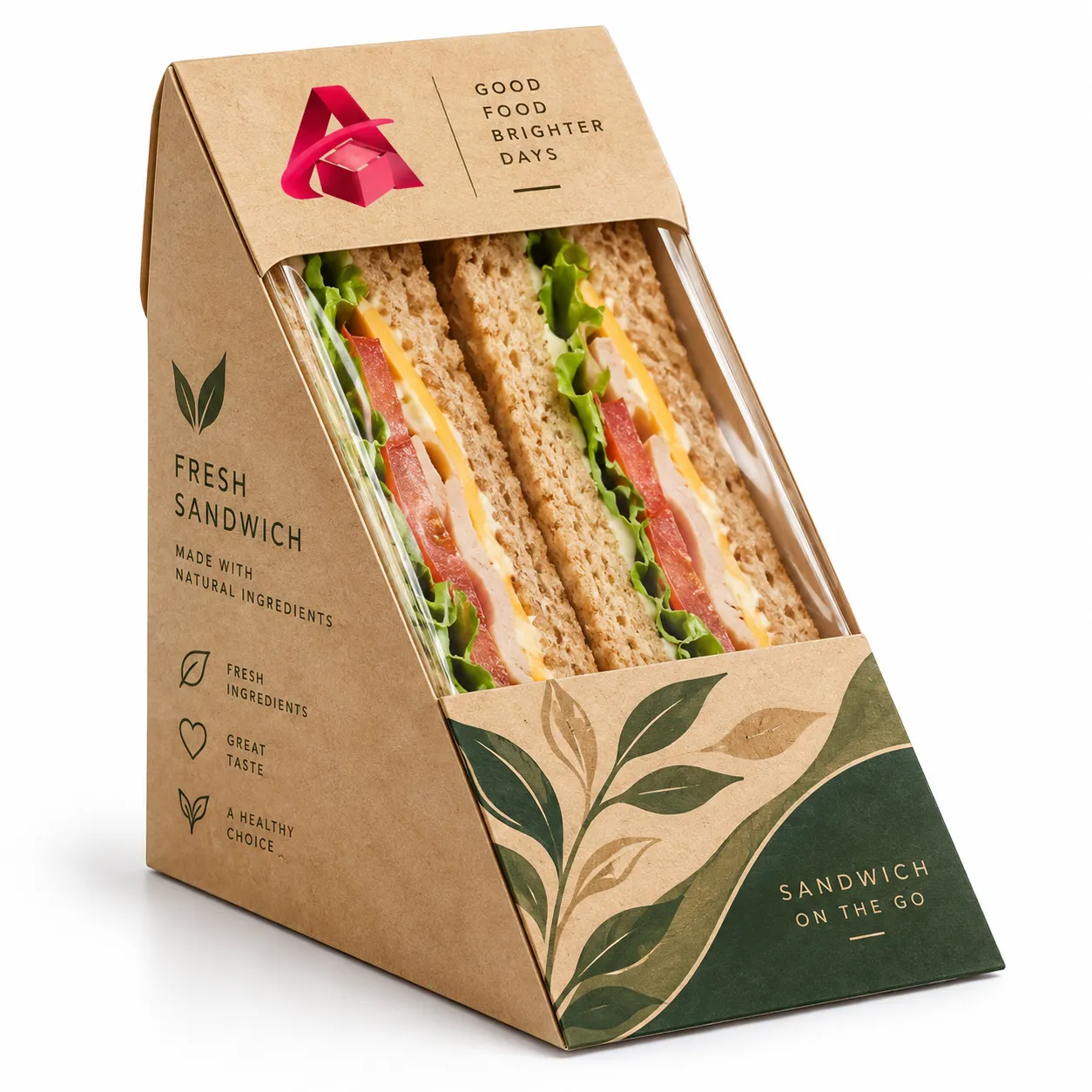
There’s also the branding side. Custom sandwich packaging with your logo, colors, and message turns every order into free advertising. Customers carry your brand through the street, share it on social media, and remember it next time they’re hungry.
Key Benefits of Quality Sandwich Packaging
Choosing the right packaging delivers real, measurable advantages for your business:
- Freshness that lasts: Food-safe materials seal in moisture and flavor, so fillings taste just-made hours after prep.
- Reliable protection: Sturdy construction resists crushing, stacking pressure, and rough handling during delivery.
- Professional presentation: Clear windows and clean designs show off your creations and build customer trust.
- Grab-and-go convenience: Easy-open designs speed up service and reduce mess for both staff and customers.
- Brand visibility: Custom printing turns packaging into a marketing tool that works around the clock.
- Cost control: Buying sandwich packaging wholesale lowers your per-unit price and keeps supply steady.
Features Built for Real-World Use
Every detail in well-made sandwich packaging serves a purpose. Here’s what to look for when comparing options.
Food-Safe, Durable Materials
Look for packaging made from FDA-compliant materials that hold up to grease, moisture, and refrigeration. Strong walls protect delicate fillings, while breathable options prevent condensation that makes bread soggy.
Clear Viewing Windows
A clear window lets hungry customers see exactly what they’re buying. This boosts impulse purchases in grab-and-go displays and reduces confusion at the counter.
Easy Assembly and Storage
Flat-pack designs save valuable storage space and assemble in seconds. That means less clutter in your kitchen and faster prep during rush hours.
Custom Printing Options
From simple logos to full-color designs, custom sandwich packaging helps your brand stand out. You control the look, the message, and the customer experience.
Comparison Table 1: Sandwich Packaging Material Types
Different materials suit different needs. Use this comparison to match the right option to your product and budget.
|
Material |
Best For |
Durability |
Eco-Friendly |
Cost Level |
|---|---|---|---|---|
|
Kraft Paper |
Wraps, cafés, casual delis |
Medium |
High (recyclable) |
Low |
|
Corrugated Cardboard |
Delivery, thick sandwiches |
High |
High (recyclable) |
Medium |
|
Clear PET Plastic |
Display cases, grab-and-go |
Medium |
Moderate |
Medium |
|
Molded Fiber |
Eco-focused brands |
Medium |
Very High (compostable) |
Medium-High |
|
Coated Paperboard |
Hot sandwiches, grease resistance |
High |
Moderate |
Medium |
Kraft paper works beautifully for a rustic, natural look. Clear plastic shines in display cases where visibility drives sales. If sustainability is central to your brand, molded fiber and recyclable options give you eco-friendly appeal without sacrificing protection.
Comparison Table 2: Sandwich Packaging Options by Business Size
Your ideal packaging depends on how much you sell and how you serve it. This table matches common business types to the best solutions.
|
Business Type |
Recommended Packaging |
Order Volume |
Custom Printing |
Wholesale Fit |
|---|---|---|---|---|
|
Food Truck / Small Café |
Kraft wraps, paper sleeves |
Low to Medium |
Optional |
Growing need |
|
Deli / Sandwich Shop |
Clamshell boxes, clear windows |
Medium |
Recommended |
Strong fit |
|
Restaurant Chain |
Custom printed boxes |
High |
Essential |
Ideal |
|
Catering Company |
Sturdy corrugated boxes |
Medium to High |
Recommended |
Strong fit |
|
Grocery / Retail Deli |
PET display containers |
High |
Essential |
Ideal |
Smaller operations often start with simple, affordable wraps and scale up as demand grows. Larger businesses benefit most from sandwich packaging wholesale orders, which cut costs and lock in consistent supply. Custom printing becomes more valuable the more units you move, since each package spreads your brand further.
Popular Use Cases
Sandwich packaging fits a wide range of food service settings. Here are the most common:
- Delis and sandwich shops: Fast service demands packaging that assembles quickly and travels well.
- Cafés and coffee bars: Clear windows and clean branding pair perfectly with a grab-and-go counter.
- Food trucks: Compact, lightweight packaging saves space and handles outdoor conditions.
- Catering and events: Sturdy boxes keep large orders organized and protected during transport.
- Grocery and retail delis: Display-ready containers boost impulse sales in refrigerated cases.
Businesses across the country, from small shops to large operations seeking Sandwich Packaging New York suppliers, rely on these solutions to serve customers better and stand out in a crowded market.
Expert Insights: How to Choose the Right Packaging
After years working with food service brands, a few clear principles stand out.
First, always match the packaging to the sandwich. A hot, greasy sub needs coated paperboard, while a cold wrap does fine in kraft paper. Using the wrong material leads to leaks, complaints, and waste.
Second, think about your whole supply chain. If you deliver, prioritize crush resistance. If you sell from a display case, prioritize visibility. The best choice depends on how your product reaches the customer.
Third, don’t underestimate branding. Studies consistently show that professional packaging increases perceived value and repeat purchases. Investing in custom sandwich packaging pays off through stronger customer loyalty and word-of-mouth.
Finally, plan for volume. Ordering sandwich packaging wholesale not only lowers your costs but also protects you from supply shortages during busy seasons. Consistent stock keeps your kitchen running smoothly.
Making Your Decision
The right sandwich packaging balances protection, presentation, and price. Start by identifying your product type and serving method. Then choose materials that match, add custom printing to grow your brand, and buy in volume to control costs.
Quality packaging keeps food safe, looks professional, and helps your sandwiches stand out on every counter and in every hand. When you get it right, you protect your product, delight your customers, and build a brand people remember.
Take a close look at your current setup. If your packaging isn’t doing all three jobs, it’s time for an upgrade that works as hard as you do.